
Running a Sex Offender Check in Nueces County
The direct starting point is the Texas Public Sex Offender Registry. Texas DPS maintains that statewide public database from data supplied by police departments, sheriffs, and other local registration authorities. Select Nueces County for a county-wide view, or use a name, city, address, ZIP code, and the location tools when the identity or place is known. The registry is built for safety awareness. It is not a substitute for the richer arrest, court, or fingerprint-based criminal-history records held elsewhere.
A good Nueces County registry check has three parts. First, search broadly enough to find a possible match. Next, compare aliases, age, physical details, address, photo, and offense data rather than relying on the name alone. Last, note the registering agency and verification details. Those fields tell a reader which office may be able to review a discrepancy. For an urgent threat or emergency in Nueces County, call 911 instead of relying on a web profile or trying to contact a listed person.
DPS and NSOPW Registry Searches in Nueces County
The Texas DPS registry is authoritative for a Texas registration entry, while the Dru Sjodin National Sex Offender Public Website, known as NSOPW, searches participating state, territorial, and tribal systems. The national tool is useful when someone may have moved into or out of Nueces County. Its reach across jurisdictions saves repeated state-by-state searches, but a result still comes from the contributing registry. A Texas address, offense, or status question should therefore be checked against DPS and, when needed, the local Nueces County registration authority.
The official NSOPW gateway illustrates the cross-state search layer used for a move involving Nueces County.
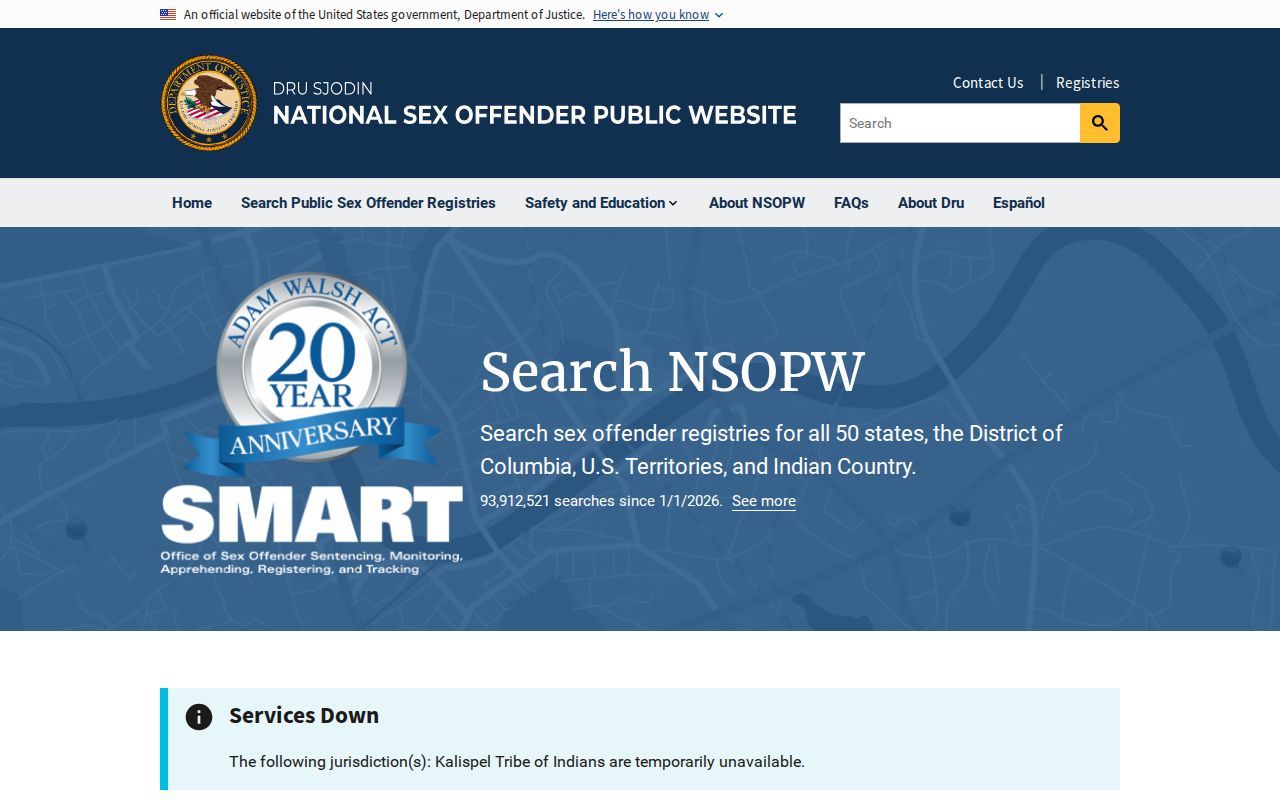
This national gateway broadens the geographic sweep, while the Texas DPS record and local agency remain the places to confirm Texas-specific registry information.
Searching the Texas Public Sex Offender Registry
The DPS interface offers both identity and location paths. Before searching Nueces County, gather the most reliable fact available, such as a complete name, a street, a city, or a ZIP code. Partial and exact-name behavior can change with live portal instructions, so avoid assuming that an empty result proves that no matching record exists. Run a second search with fewer filters if a narrow attempt fails, then review the result list for the correct person.
- Open the official Texas DPS registry, read its conditions and choose the appropriate name or location search mode.
- Enter a last name and optional first or middle name, or use the address, city, county, ZIP, radius, or map controls offered in the live form.
- For a county search, select Nueces and compare all likely matches by photo, age, physical description, aliases, and listed location.
- Open the full profile, read the offense, risk, status, registering-agency, and verification fields, then contact the responsible agency about a material discrepancy.
| Field Label | Type | Required | Use in a Nueces Search |
|---|---|---|---|
| Last Name | Text | Mode dependent | Starts a name search; follow the live help for partial or exact matching. |
| First Name | Text | No | Narrows a common last name. |
| Middle Name | Text | No | Adds another identity check when it is known. |
| Address | Text | Location mode | Centers a street or location search. |
| City | Text or dropdown | No | Can focus on Corpus Christi, Robstown, Bishop, or another listed place. |
| County | Dropdown | No | Select Nueces for a county-wide filter. |
| ZIP Code | Text | No | Refines the location when city limits and mailing areas differ. |
| Radius | Dropdown | Location mode | Use the distance options shown by the live portal. |
| Map or List | Control | No | Changes how spatial or result data is displayed when available. |
Search and Clear controls execute or reset the form. DPS controls the current labels and options, so the live screen should settle any difference between this inventory and a later portal update.
Nueces County Registry Office Routing
Chapter 62 assigns local registration work to a municipal police chief's office, the county sheriff, or another designated centralized authority. In practice, a Corpus Christi resident should confirm the correct desk with CCPD. A person living outside a municipality should call the Nueces County Sheriff's Office. The research did not identify a reliable public address or set of counter hours for a dedicated registry desk, so calling before a visit is more accurate than treating the courthouse as a universal walk-in counter.
Nueces County Sheriff's Office
901 Leopard Street
Corpus Christi, TX 78401
(361) 887-2222
Use the official sheriff directory to confirm the current registration desk and hours before appearing.
Corpus Christi Police Routing
Use the city public-records hub to reach police open data and registry resources.
Confirm the responsible registration contact directly with CCPD.
Suspected noncompliance should go to the law-enforcement agency responsible for that address. Nueces County residents should report facts, such as the listed location and observed mismatch, without confronting the registrant. DPS or the local authority can review reporting status; a member of the public cannot decide compliance from a web result alone.
What a Registry Profile Shows
A Texas public profile combines identification, location, registration, and offense data. The set can include a name and aliases, photograph, sex, race, date of birth or age, a physical description, scars or tattoos, and vehicle information. It may also show public institutional, school, or work fields when Chapter 62 permits them. Not every field appears on every Nueces County record, and local reporting timing can affect what the DPS screen shows.
| Name and Aliases | The registered name plus alternate names reported for identity matching. |
|---|---|
| Photo and Description | A photograph and public physical traits that help distinguish people with similar names. |
| Address or Location | The public residence or location information supplied under Chapter 62 rules. |
| Offense and Statute | The offense description, legal citation, conviction or adjudication date, and jurisdiction when published. |
| Risk Level | Texas Level 1, 2, or 3 risk information, which is not the same as a federal duration tier. |
| Registration Status | The registering agency, status, and verification details made public by DPS. |
| Additional Public Fields | Authorized victim age or sex categories, vehicles, marks, tattoos, and certain school, work, or institutional details. |
A profile does not replace a court file. It also does not show all criminal events connected with a person. Readers who need to understand the charge, disposition, or sentence should verify the original case rather than infer those facts from the Nueces County registry entry.
Nueces County Registry Risk Scores
Texas risk levels describe an assessment, not a clock. Level 1 means low risk under the state screening tool, Level 2 means moderate risk, and Level 3 means high risk. A civil-commitment or other status is separate. This differs from the federal SORNA tier framework, where tier labels are often discussed with set registration periods. Applying that federal shortcut to a Nueces County DPS profile can produce the wrong conclusion.
Texas duration turns on the reportable offense and Chapter 62, not just the number beside Risk Level. A low-risk score does not itself promise a short term, and a high-risk score is not by itself the source of a lifetime duty. Read the offense and status fields together, then consult the statute or the responsible agency for the duty tied to that case. Community notice also depends on the offense, risk information, and the procedures that apply to the specific Nueces County registration.
Registration Requirements and Levels in Texas
Texas separates the risk assessment from registration duration and verification frequency. Chapter 62.101 identifies sexually violent and other specified offenses for which the duty generally ends at death, subject to any relief allowed by law. Other reportable adult convictions generally run until the tenth anniversary of release from a penal institution, discharge from supervision, or court dismissal, whichever occurs later. The registering agency tracks the duty that applies to a specific Nueces County profile.
| Rule or Status | Duration | Verification |
|---|---|---|
| Level 1, 2, or 3 | Not set by the risk number alone | Read with the offense and statutory duty. |
| Specified lifetime duty | Until death for offenses listed by Chapter 62.101, subject to statutory relief | The schedule follows the applicable offense and registration rule. |
| Other reportable adult conviction | Generally ten years after the latest controlling discharge, release, or dismissal event | Annual verification generally occurs around the birthday window. |
| Certain repeat sexually violent histories | As required by the governing duty | Not less than once every 90 days. |
| Removal after duty expires | After the end of the lawful duty | DPS acts after verified notice or a qualifying request under Article 62.251. |
Texas does not impose one simple statewide residency-distance rule on every registrant. Some supervised people may face child-safety-zone conditions, and a city rule may require separate review. No current source supported one blanket Nueces County radius, so searchers should not invent a distance or treat a map circle as proof of a violation.
Nueces County Registry Verification Windows
Most registrants generally verify around an annual birthday window. Certain repeat sexually violent histories require reporting not less than once every 90 days. These are recurring compliance points, not guarantees that every public field changes on the same day. A Nueces County profile can depend on a registrant's report, local agency review, and the later transfer of information to DPS.
That sequence explains why the registration office matters. Corpus Christi police may be the local authority for a city resident, while the Nueces County sheriff may handle an address outside municipal limits. The public should use the listed registering agency and the known location to choose the right contact. If the profile appears stale, record the URL, date viewed, disputed field, and reason for concern. Give those facts to law enforcement and let the agency check the official file.
Stale Nueces County Registry Information
Registry data can lag or contain an address that needs review because the public screen depends on local reporting. Start by checking the same person in the Texas registry using both a name and a location search. Compare aliases, physical details, offense data, registration status, and agency rather than relying on a pin alone. If a cross-state move is possible, check NSOPW, then return to the source registry named in the result.
The Texas Public Information Act is one part of the state's access framework, though statutory confidentiality and registry-specific rules still control what may be released.
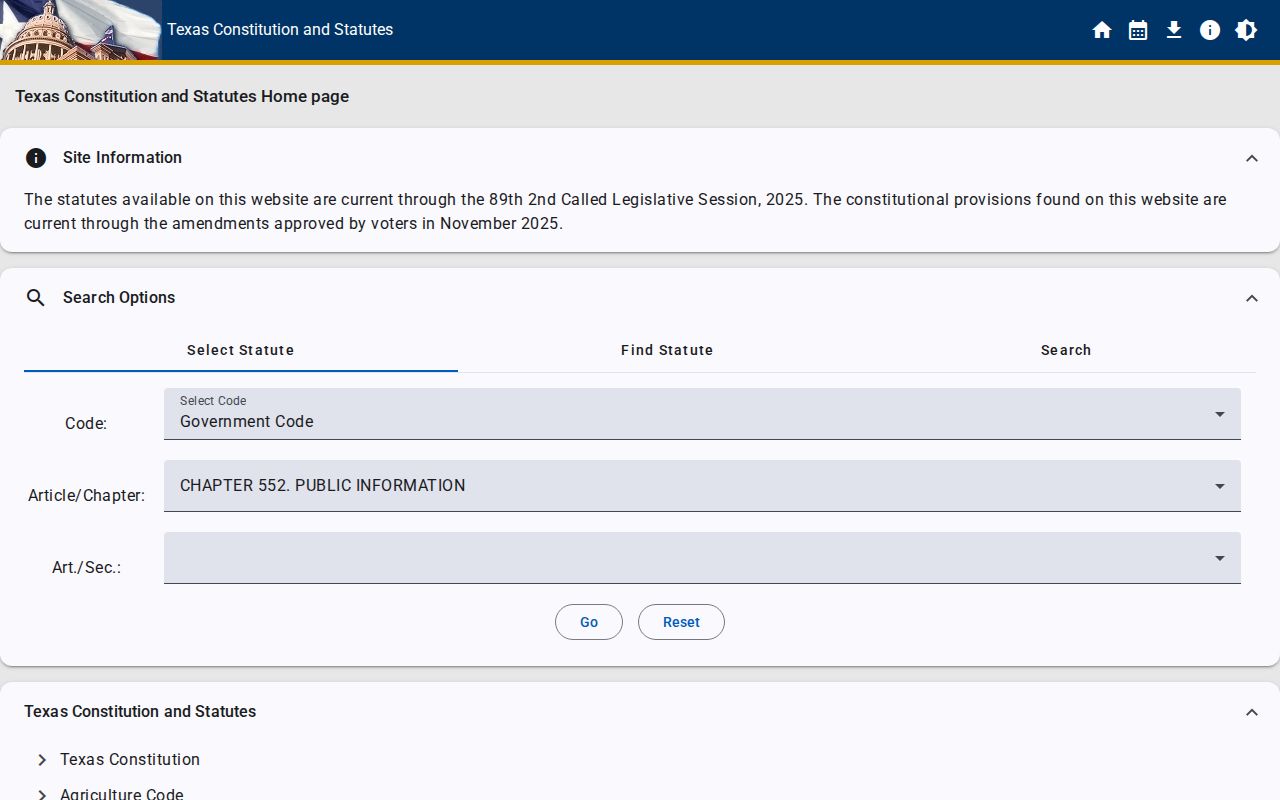
The statute source helps explain why public access has legal bounds: a requester can seek held records, but the agency need not create a new report or disclose protected data.
For a Texas registry correction, DPS and the relevant Nueces County or city authority are the proper channels. When the issue is suspected failure to comply, give the facts to that local agency. Article 62.102 makes failure to meet registration duties a criminal offense, but an online mismatch alone does not prove that offense. Emergencies belong with 911.
Lawful Use and Community Notification
Texas publishes registry information so residents can make informed safety plans and understand required community notices. Chapter 62 provides for school and community notification in defined cases and controls what authorities may publish. A Nueces County result can support calm steps such as reviewing household safety plans, checking a route or neighborhood, or asking the registering agency about a material error. It does not authorize a private person to investigate, confront, punish, or publicize claims beyond the official record.
Use the Texas Code of Criminal Procedure Chapter 62 for the registration and notification framework. Read the DPS disclaimer as part of every search. A public profile may be incomplete or out of date, and it should never replace direct contact with law enforcement when a real safety concern exists.
Misuse is prohibited: Texas Chapter 62 bars using registry information to threaten, harass, or intimidate a registrant or household, and misuse may be a crime. Use Nueces County registry data only for lawful community awareness and safety.